


When discussing shop displays, solutions are often divided between standard products and bespoke products. In reality, the more important distinction is another: that between Modular displays and customisable displays.
A truly modular system is designed to evolve over time, adapting to new spaces and new needs without having to redesign every element. A custom-made display, on the other hand, is created to meet a specific request and, when needs change, often requires a new design.
To understand this difference means to choose one the most efficient, scalable, and lasting solution.
Why modularity is different from customisation
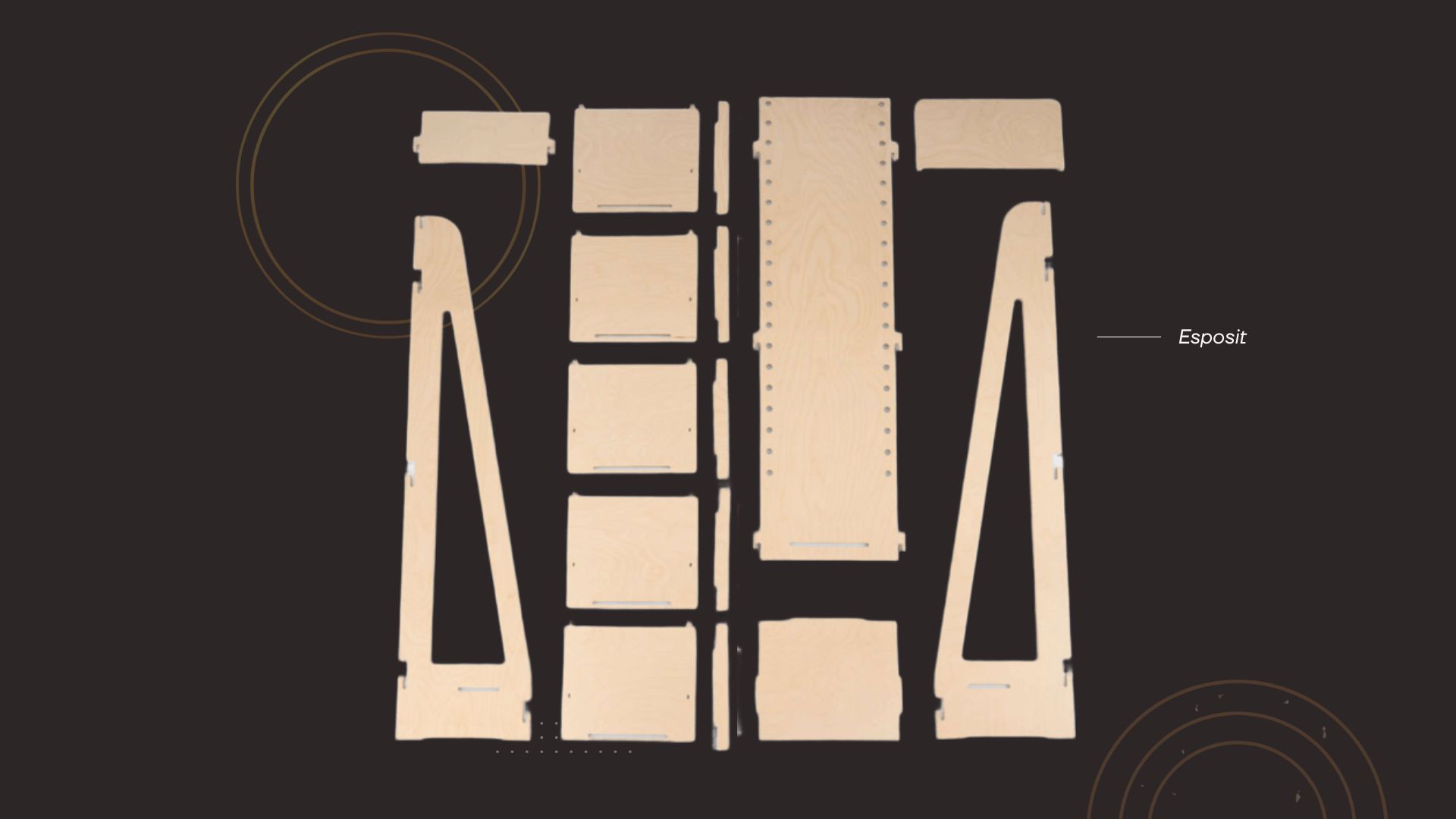
Having over 100 catalogue display models already allows for most display needs to be met, covering a wide variety of applications with different formats, sizes, and configurations. However, the real difference emerges when a design detail needs to be altered. Changing the length of a shelf, the width of a back panel, or the position of a joint rarely means modifying just a single component. In most cases, the entire structure needs to be rethought to maintain balance, stability, and aesthetic coherence.
For this reason Modularity does not equate to the simple possibility of customising a product.
Checkmate: the quintessential modular display
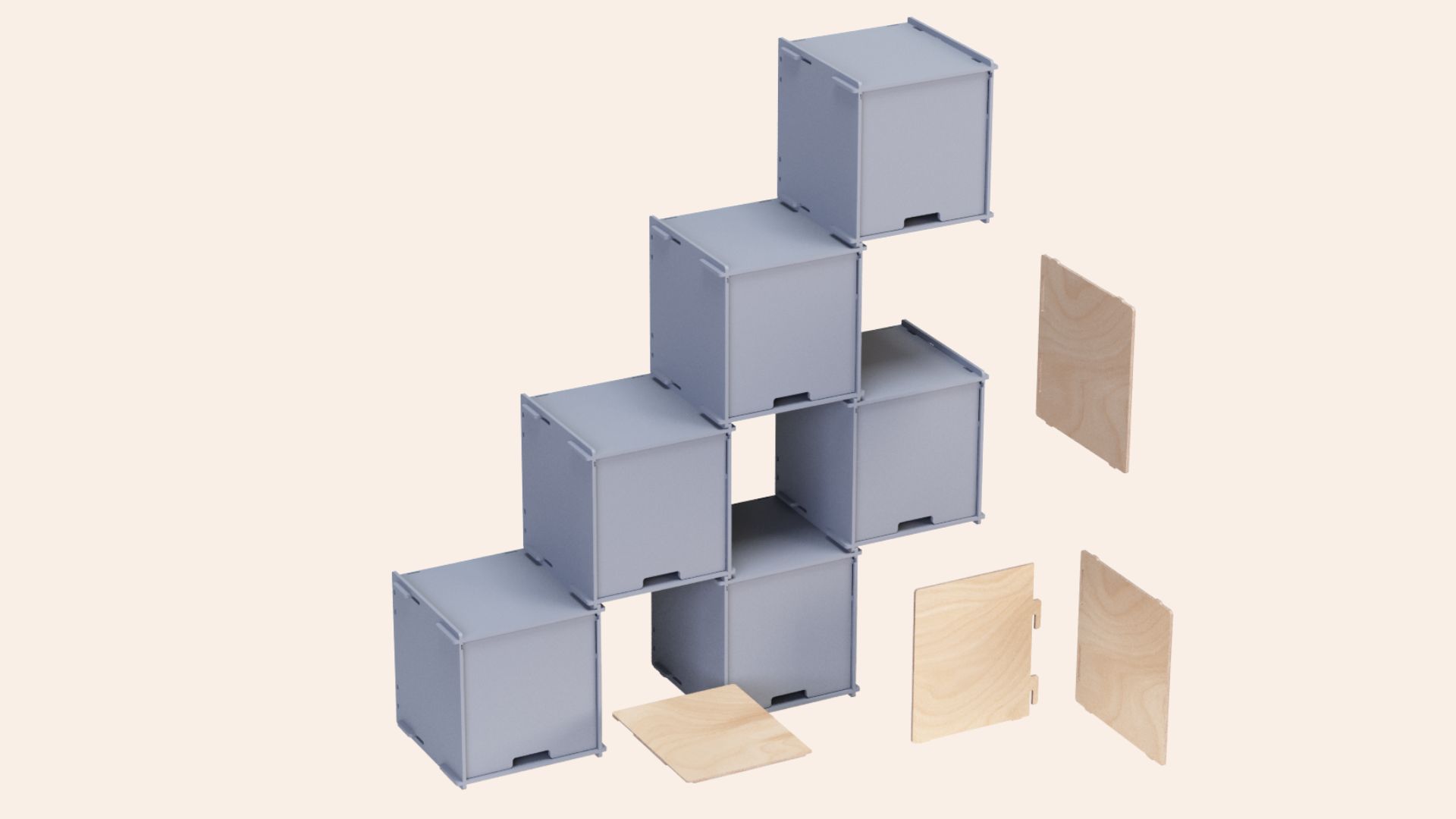
The line Checkmate represent the concept of modularity in its most complete form. Available in X4, X5, X6 and X8 versions, as well as in chalkboard and transparent finishes, this display unit was developed as a modular system rather than a single element. Each module is made up of independent cubes with patented flap doors, creating an elegant and functional visual continuity. Each element can be used autonomously or integrated with other modules through the side panels, designed to connect the different units.
The result is a System that grows with exhibition space, always maintaining the same design identity.
Adjustable stands: when the structure remains the same
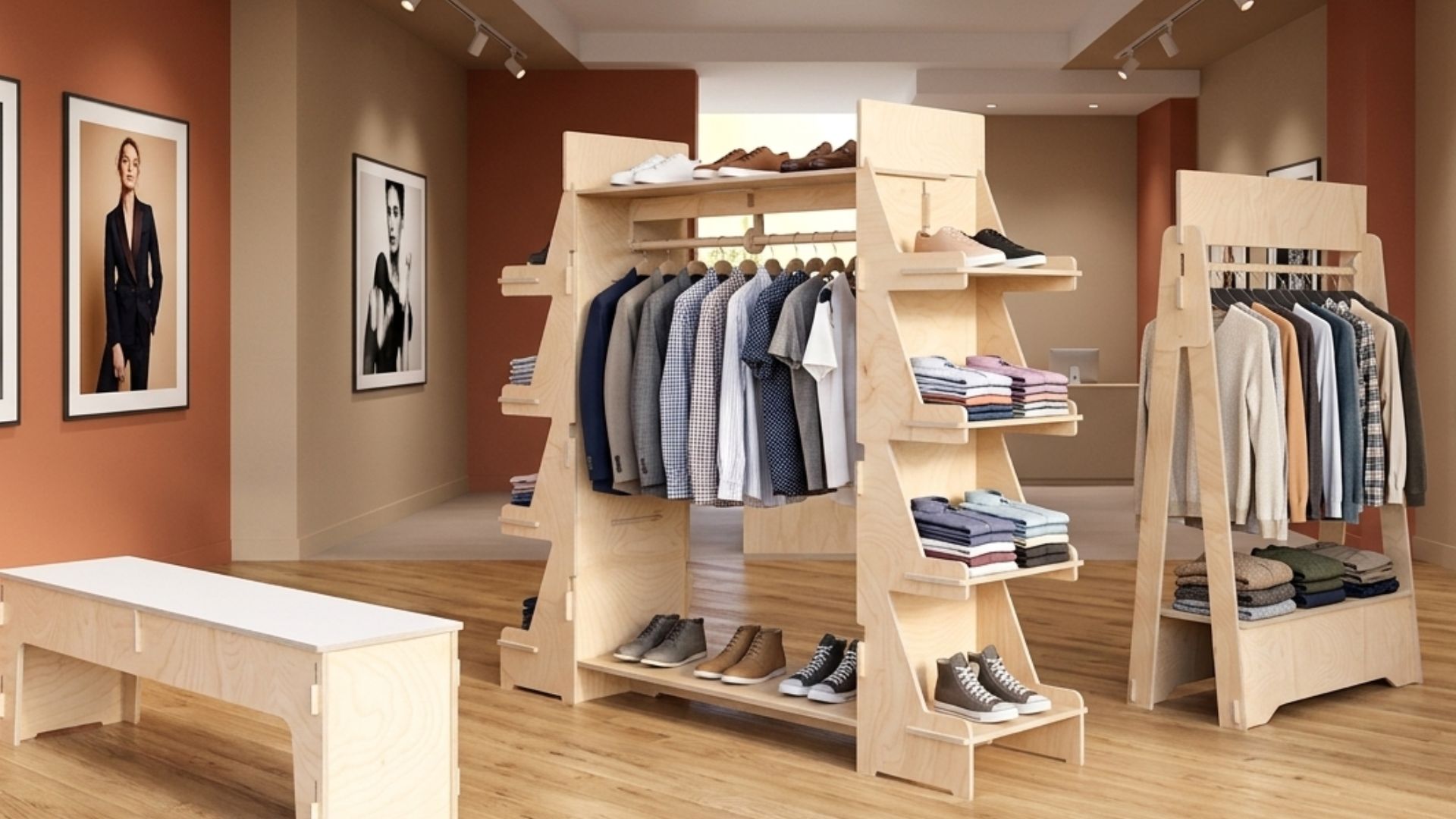
Modularity should not be confused with adjustability. In adjustable displays, the structure remains the same, whereas Is it possible to change the position of the components according to pre-defined layouts?. This is the case of the lines Adapti, Flexible, Arbor, Double Apparel e Pam, in which shelves can be moved thanks to pre-made joints and drillings. The minimum distance between shelves is 16 cm, while the maximum distance varies according to display needs. The back panel can also be adjusted via a grid of holes at 6 cm intervals, ensuring precision and ease of configuration. The Adapti line also features an additional function: shelves can be installed horizontally or inclined simply by using a different hook point.
Wally: modularity and in-house production
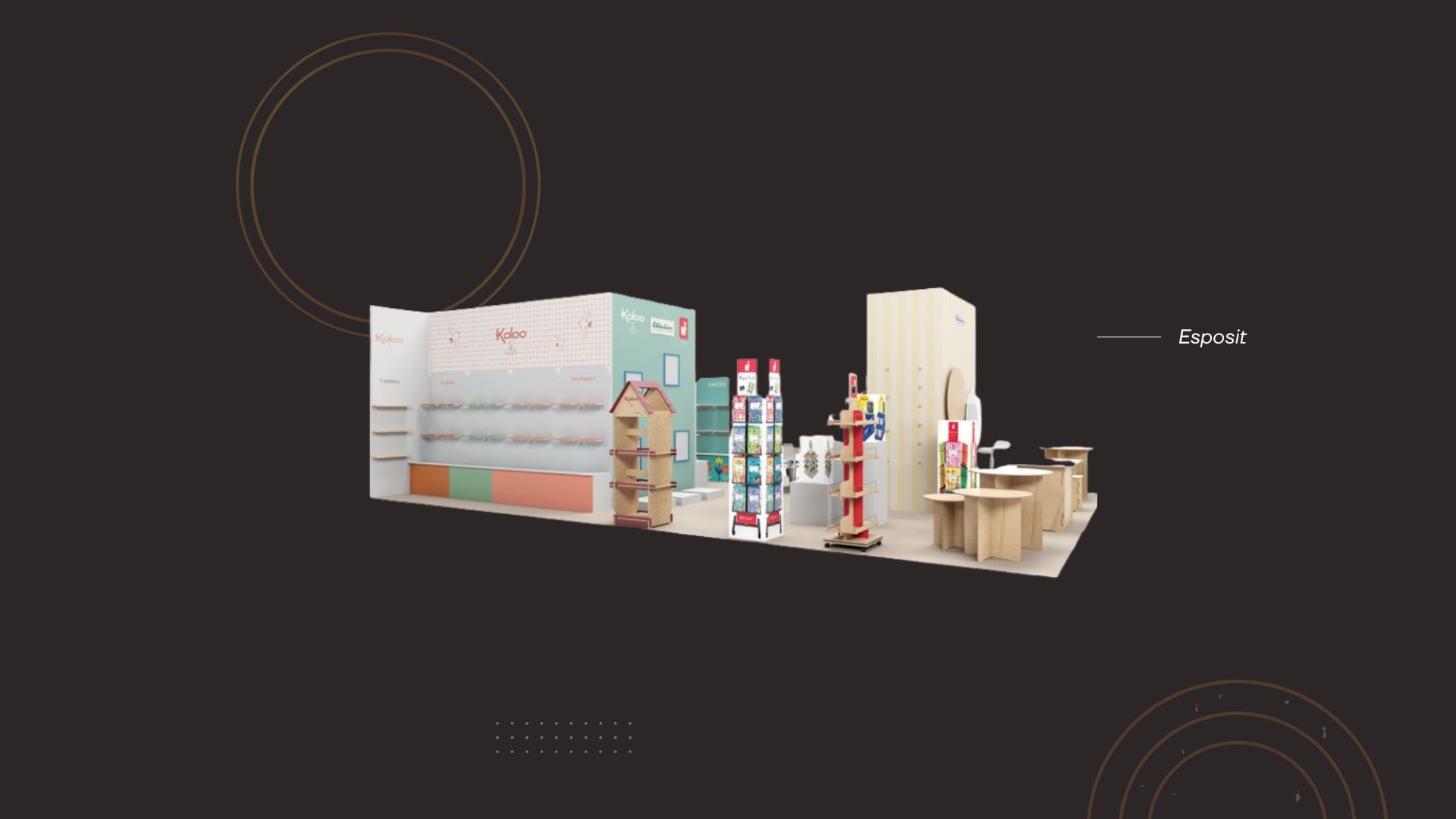
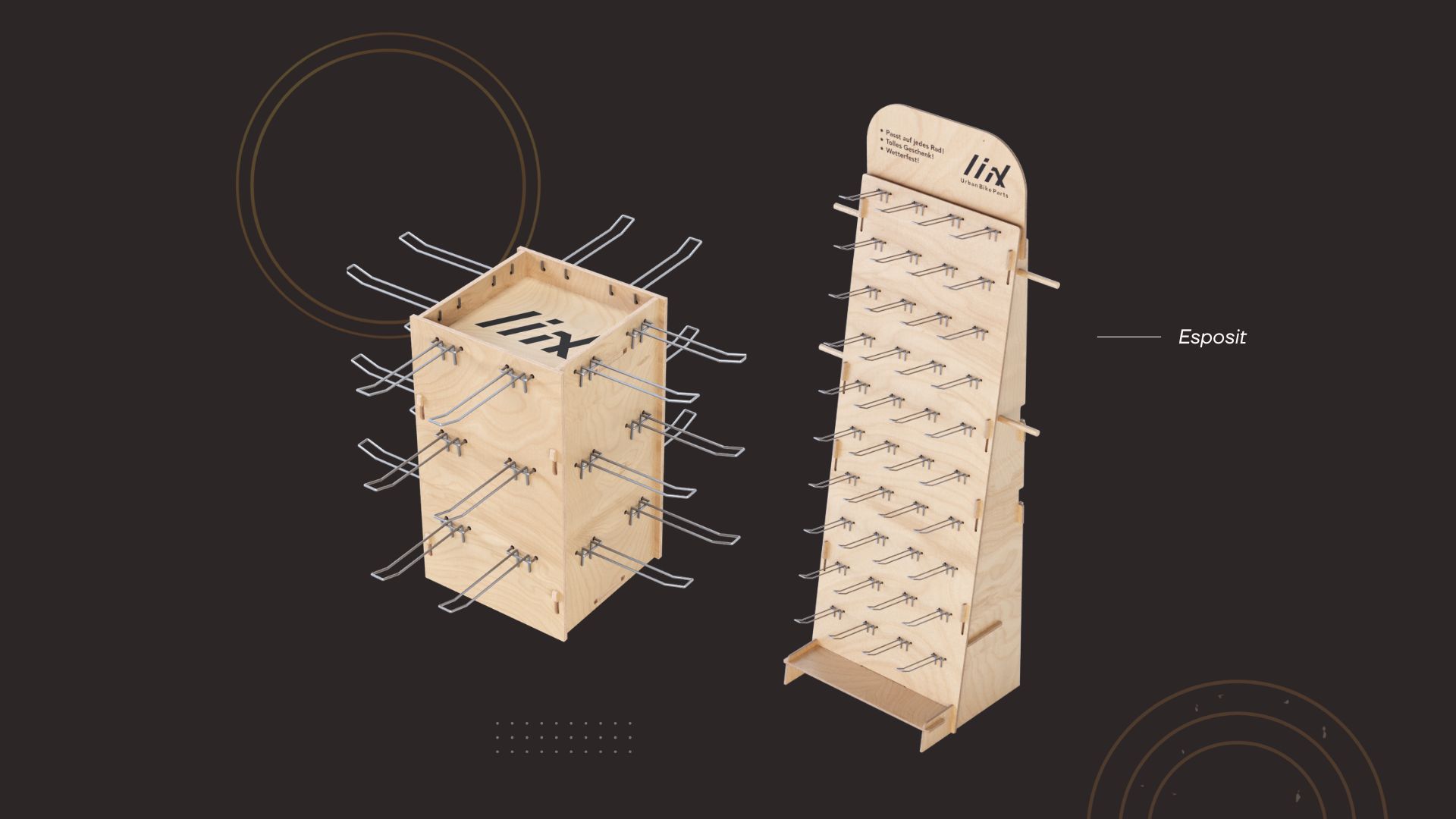
The exhibitors Wally Six e Wally Ten adopt a different approach. The back is designed with openings that allow installing hooks and shelves of different lengths, making the setup extremely flexible. The real added value, however, is the in-house production. All these components are produced directly in our factory in Novello (CN). This means having complete control over the production chain, reducing turnaround times, and being able to manage specific customisations without relying on external suppliers or minimum quantities.
A choice that translates into greater competitiveness, lower costs, and better project scalability.
Move C: The hybrid system
The line Move C represents the point of’a meeting of modularity and adjustability. It is in fact born from the union of the characteristics of the Blister and Move lines, using galvanised steel shelf supports of 7 mm diameter and 18 mm length, inserted into pre-drilled holes on the sides. The system allows for quickly change the shelf configuration without altering the supporting structure.
This is precisely the substantial difference between adaptation and modularity: instead of rebuilding a new display unit each time, we work within a system designed to evolve over time.
Modularity or customisation: which to choose?
The answer depends on the project's objectives.
If the need is to create a unique and unrepeatable solution, customisation is the best way forward.
If, however, the goal is to create a display that is intended to change over time, capable of adapting to new products, new points of sale, or new configurations, a modular system offers concrete advantages in terms of flexibility, implementation times and cost optimisation.
Designing variation means precisely this: don't just modify a display, but create a system that can evolve with the business.