


In the sector of Retail displays, The difference between a structure that simply stands and one that truly functions is often measured in tenths of a millimetre.
It may seem like a minor detail, but it's precisely where a project's success lies: stability, ease of assembly, durability, perceived quality, and aesthetic appeal. In the design of interlocking displays, every tolerance directly affects the user experience and the brand's perception within the point of sale.
Designing a display stand doesn't actually mean just drawing panels to be assembled. It means creating Precise relationships between materials, thicknesses, jointing methods, and structural loads so that each component contributes to the effectiveness of the exhibition solution.
Interlocking displays: why design makes the difference
In the world of point-of-sale displays, numerous types of interlocking systems exist. Some are simple, robust, and quick to produce. Others require more design attention but allow for a more elegant result, consistent with the brand's image. One of the most common examples is the interlocking system with dogbone machining. This is an extremely productive solution, particularly used in CNC panel processing. It guarantees excellent structural stability but has an obvious limitation: remains visible. The round buttonhole-like features at the corners, necessary for the passage of the router, actually become a recognisable aesthetic element that often highlights the construction system more than the product on display.
In the design of our bespoke retail displays, the objective is different: the structure must be effective yet unobtrusive. The technical elements must support the product without becoming the main focus. For this reason We choose each joint system according to the specific stress. that the panel will have to support.
Cross joint: simplicity and load distribution
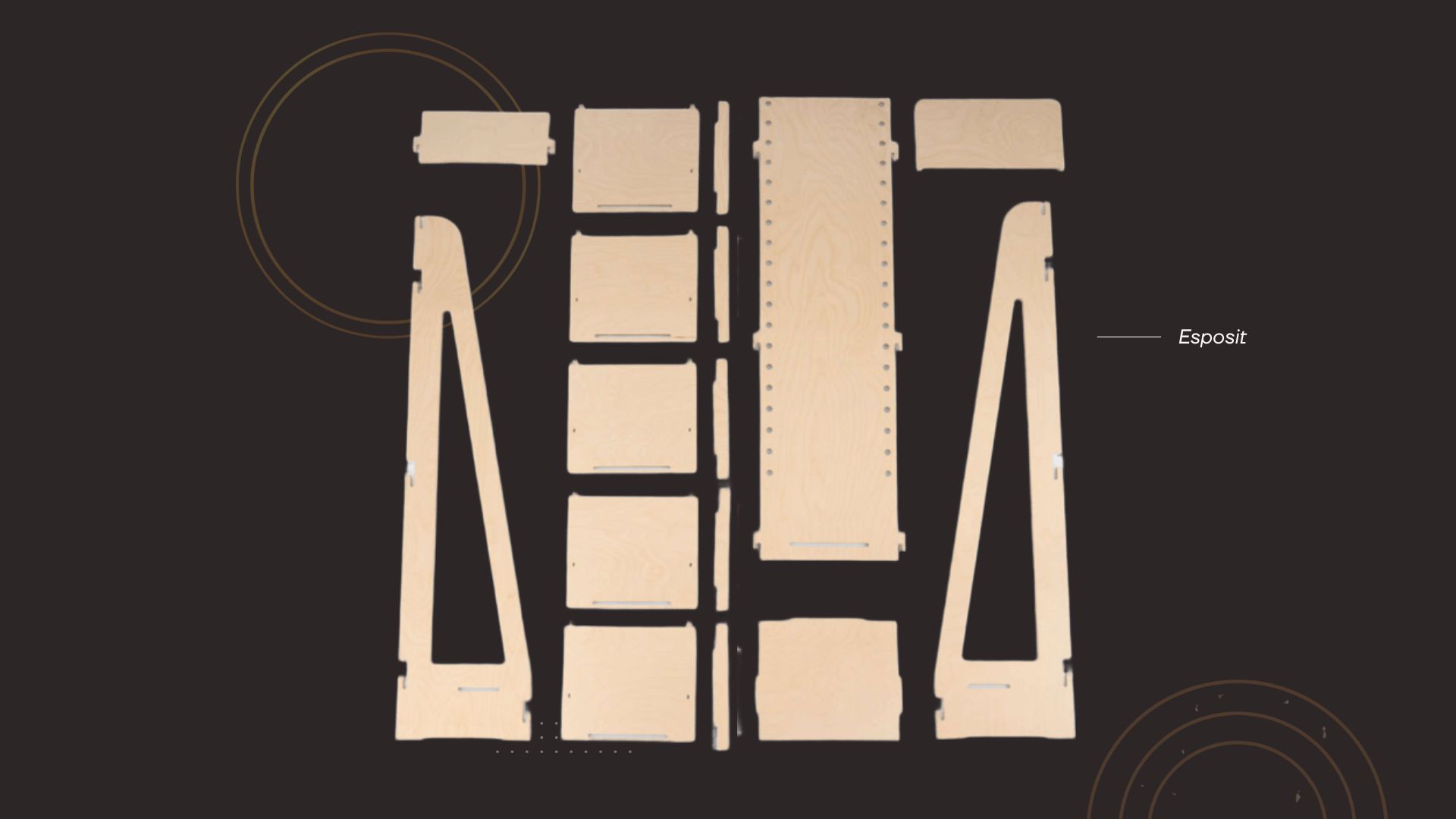
When the main task is to distribute weight efficiently, we use the cross joint.
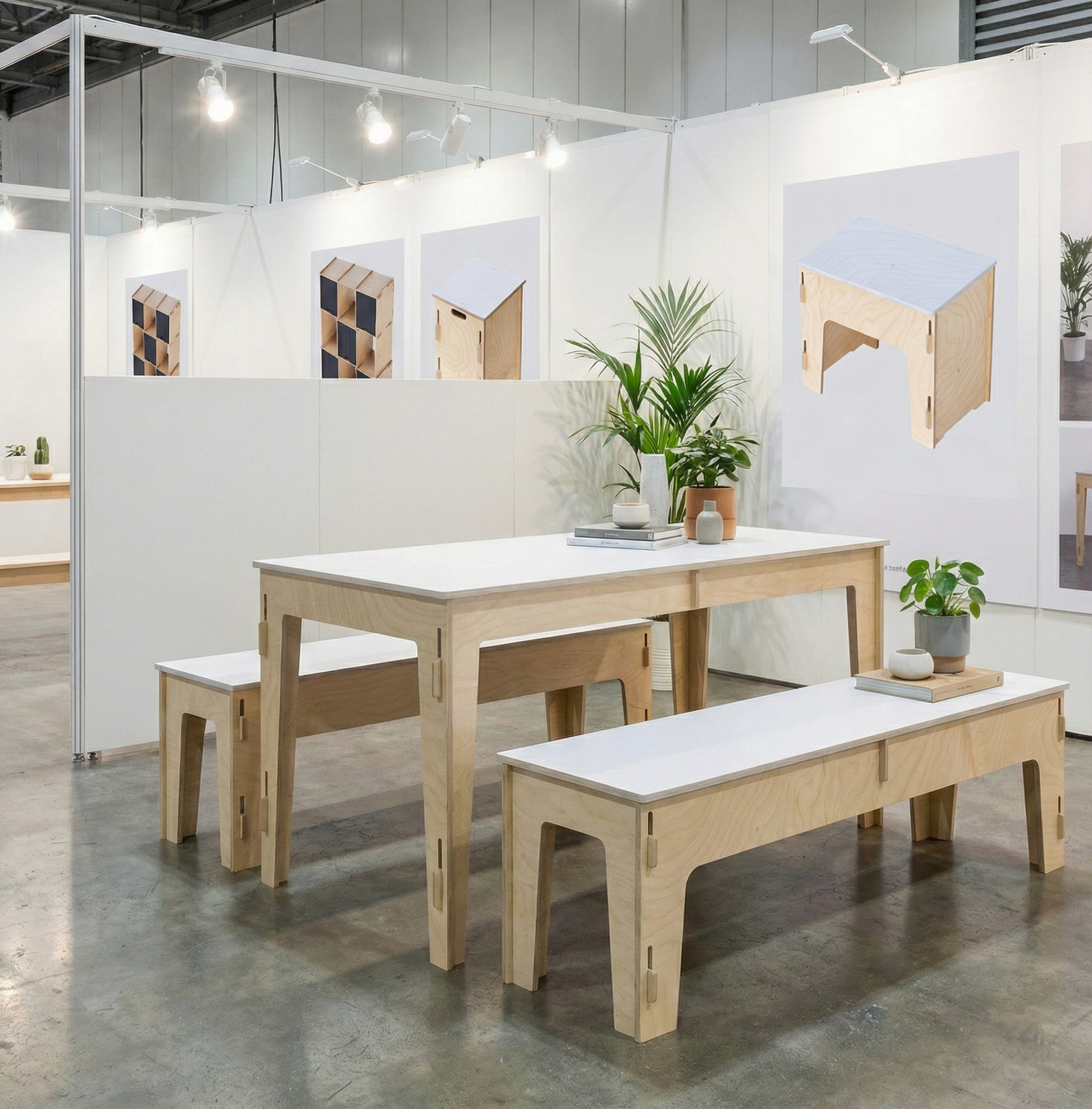
This system provides Linear and clean cuts that allow panels to intersect transferring the load directly to the structure. The absence of visually invasive work allows for the maintenance of a’Minimal and tidy aesthetic, particularly appreciated in the Floor stands and in solutions dedicated to visual merchandising.
Bayonet joint: maximum seal without visible elements
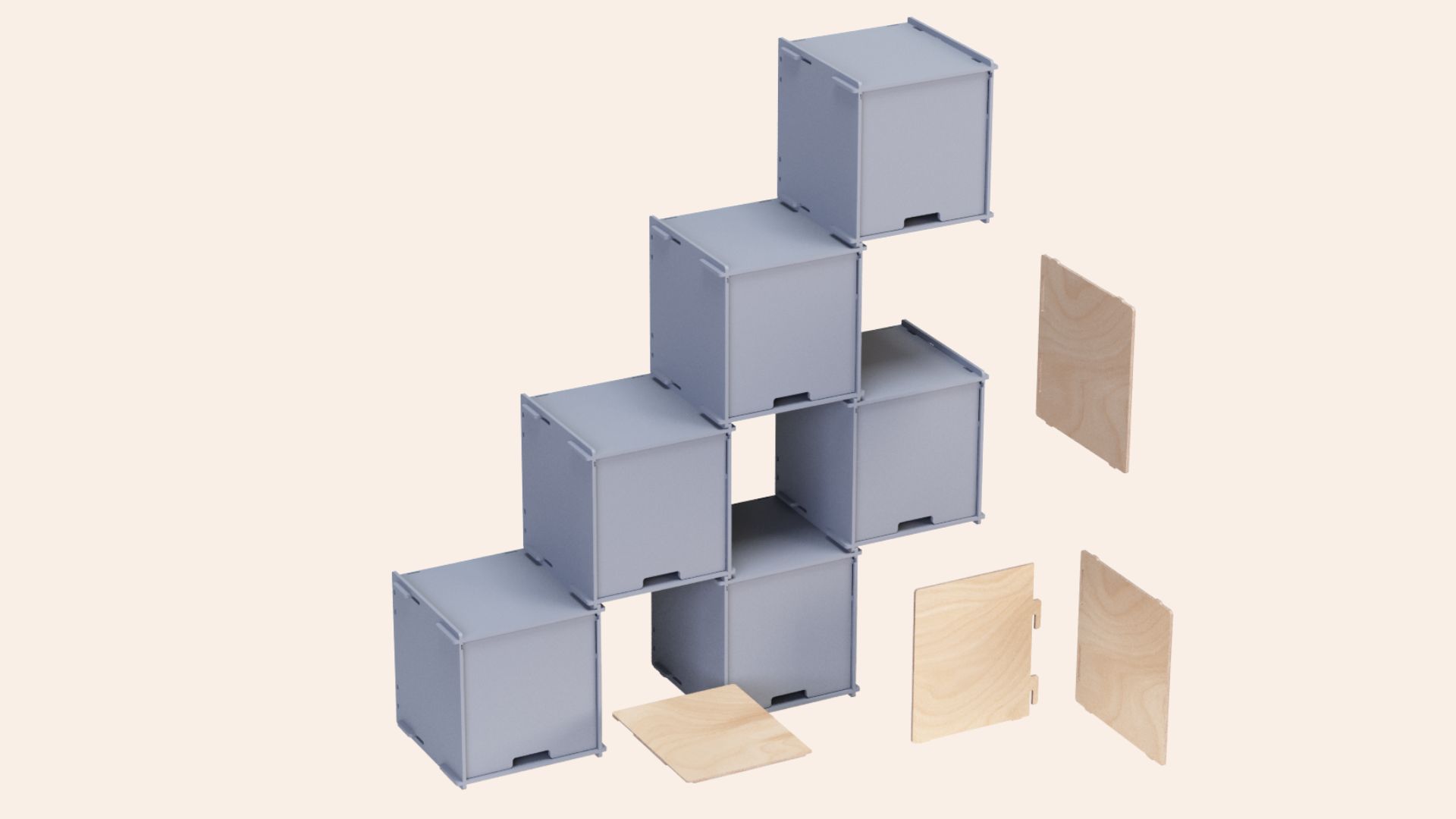
In some strategic points of the structure, such as the backs of the display units, it is necessary to prevent any accidental movement or detachment. In these cases, we use a bayonet fitting. The panel is inserted into its housing and secured through a slight rotation or translation which guarantees its mechanical fixing. The advantage is twofold: high structural stability and a complete absence of visible hardware, a fundamental aspect in modern retail display solutions.
Slot joint: aesthetic cleanliness and surface continuity
When the priority is the visual quality of the finished product, we use dovetail joints. The housing is taken from within the panel without reaching the outer edge making the graft completely invisible. This solution is particularly effective at the joining points between sides, backs and product stops, where the continuity of the surfaces helps to enhance the image of the display. From a production point of view, it requires greater precision, but allows for the creation of professional display units characterised by a A cleaner and more refined design.
Tolerances and thicknesses: the heart of display design
This is precisely where millimetre tenths become crucial. A joint only works correctly when the tolerances are calibrated with precision. If the cut is too tight, assembly becomes complex and risks damaging the material. If it's too loose, the entire structure loses rigidity and stability. In the design of our shop and point-of-sale displays, we work with panels of variable thickness, generally between 9 and 18 mm.
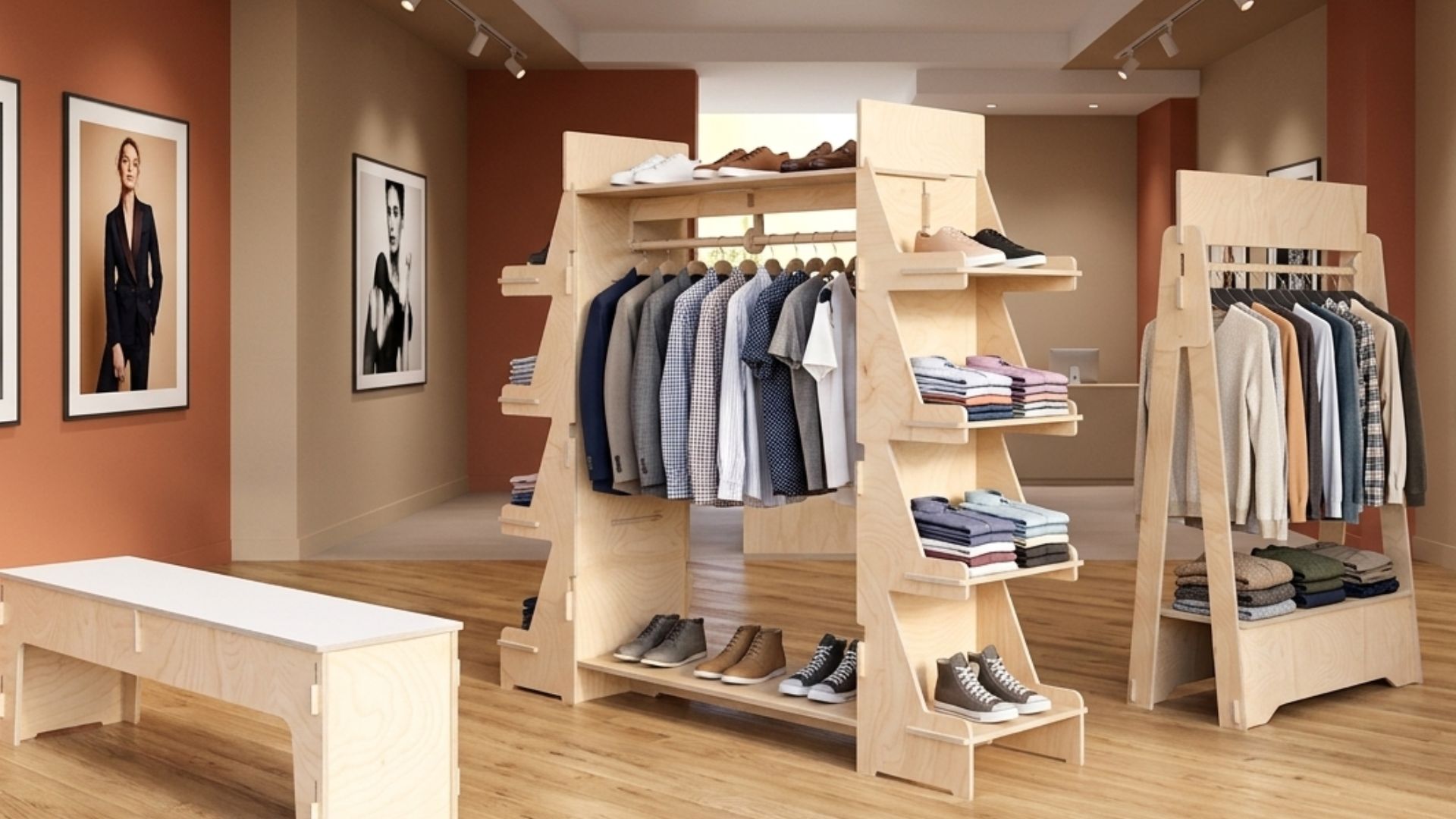
The choice depends on multiple factors: the weight of the product on display; the size of the display unit; the method of transportation; the frequency of assembly and disassembly; and the context of use. For our wooden floor display units, the 9mm panel often represents the best compromise between robustness, lightness, and precision of the joints. There are also components like trays and shelves which, although not subject to heavy loads, require a greater visual presence. In these cases, we increase the thickness to convey a sense of greater solidity and perceived quality.
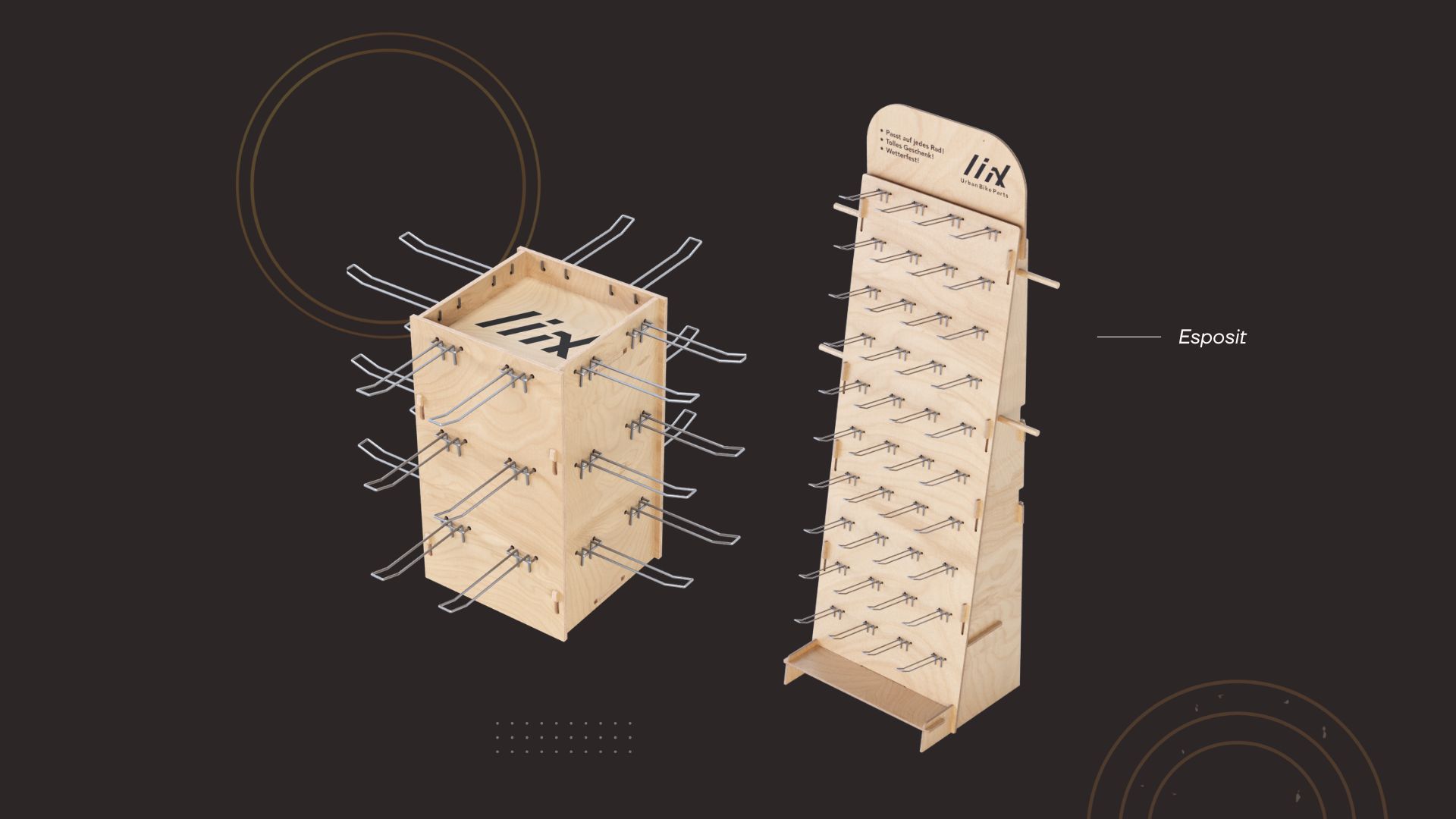
For structural elements such as high-load seating or supports, the design follows different criteria, mainly focused on mechanical strength and durability. An example is the our Chaos exhibition system, a modular solution that can be configured with different thicknesses depending on the type of product to be displayed, from light packaging to bottles and heavy items.
Retail displays: quality is perceived in the details
Assembling a display stand is relatively simple. However, designing it to be stable, intuitive to assemble, durable over time, and consistent with the brand's identity requires specific skills and a deep understanding of materials. The joints, tolerances, and thicknesses are details that the end customer rarely notices consciously. Yet, it is precisely these elements that determine the quality of the experience.
When everything is designed correctly, the display stand doesn't draw attention to itself: it enhances the product, facilitates the purchase, and contributes to the effectiveness of in-store communication. And it is precisely at that moment that it stops being a simple support and becomes a Strategic sales and branding tool.